
At the Source of the Oothukadu Stream
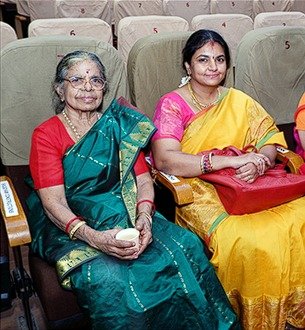
At the Source of the Oothukadu Stream
Learning Under Smt. Needamangalam V. Alamelu
In the vast ocean of Carnatic music, certain tributaries run so deep and so pure that only those who seek them with genuine devotion ever find their way to their banks. The musical legacy of Oothukadu Venkata Subbaiyer — one of the most towering composers in the history of Carnatic music — is one such tributary. And for Ram Srivatsan, the privilege of drinking directly from this source came through an association of extraordinary intimacy and grace — with Smt. Needamangalam V. Alamelu.
Oothukadu Venkata Subbaiyer (c. 1700–1765) was one of the pioneering composers of Indian classical Carnatic music, a vaggeyakara of the first order whose works — a blend of a high degree of scholarship on a variety of subjects and inspired expression — place him in a league that very few composers have ever occupied. The Music Academy Madras Experts' Committee noted that his compositions filled a vital gap between Purandara Dasa and the Carnatic Trinity of Tyagaraja, Muthuswami Dikshitar, and Shyama Shastri. His works — ranging from the sublime Krishna compositions that have melted generations of hearts to the architecturally magnificent Kamakshi Navavarana Kritis on the Goddess Srividya and the deeply devotional Saptaratna Kritis — represent a universe unto themselves within the Carnatic canon.
Smt. Alamelu is a principal disciple of Needamangalam Sri Krishnamurthy Bhagavathar, himself a sixth-generation descendant of Oothukadu Venkata Subbaiyer, who was the singular force responsible for bringing the composer's works to light and popularising them in the twentieth century. Carrying forward that sacred responsibility after her guru, Smt. Alamelu has been rendering religious discourses focused on Oothukadu Venkata Kavi's works, performing the authentic versions of his most celebrated compositions across India and abroad. She has been honoured with titles such as Bala Meera, Kokila Vani, and Ghathra Sangeetha Vidushi, and has been named an Asthana Vidwan of Sri Kanchi Kamakoti Peetam — a recognition that speaks not just to her musical stature but to her standing as a custodian of a sacred tradition. She has about 100 disciples and regularly conducts classes across many parts of Chennai.
It is from this extraordinary musician — a direct link in an unbroken chain stretching back to Oothukadu Venkata Subbaiyer himself — that Ram learnt a vast body of the composer's works. The Rasa Ganams, the majestic Kamakshi Navavarana Kritis, the Saptaratna Kritis, and a treasure of rare thillanas — compositions that are not easily available, not commonly taught, and not lightly shared — all came to Ram through Smt. Alamelu's generous and devoted guidance. The number of compositions Ram absorbed under her is not a small curated selection but a genuinely expansive body of sahithyam that few outside this direct lineage have access to.
Ram also earned the deep affection of Smt. Alamelu's brother, the noted Harikatha exponent Dr. Needamangalam Subbaraman — a scholar and performer of formidable distinction who was honoured with the titles Dharma Prachara Upanyasa Chakravarthy and Sollin Selvan, and who passed away in February 2019. That Ram earned the warmth and regard of both siblings — two of the most authoritative custodians of the Oothukadu legacy — is a measure of the seriousness and sincerity with which he approached this learning.
Beyond receiving compositions, Ram had the further privilege of accompanying Smt. Alamelu as a vocal support in her Harikatha performances — an experience of a wholly different order from classroom learning. To sit beside a master during a live Harikatha, to follow her musical instincts in real time, to give voice to compositions in the context of their devotional storytelling — this is an education that no amount of private tuition can replicate. It shaped Ram's understanding of how these compositions live and breathe in performance, not merely how they are structured on the page.
For Ram, this association is not merely a chapter in his musical biography. It is a living connection to one of Carnatic music's most precious and irreplaceable streams — and one he holds with both hands, and with a full heart.
