
The Brinda Bani
The Brinda Bani — A Musical Lineage Worth Seeking
Some musical traditions do not come to you. You have to go looking for them.
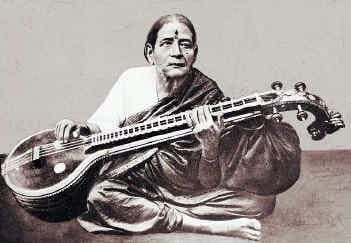
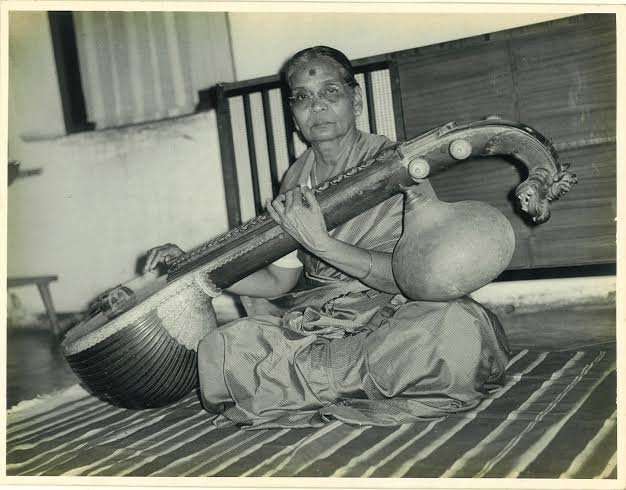
Having built the bedrock of nineteen years under Smt. Akhila Siva, Ram Srivatsan made a further deliberate choice — to seek out and immerse himself in the Brinda Bani, one of the most refined and rarified traditions in the classical canon. Named after the legendary Sangeetha Kalanidhi T. Brinda (1912–1996), this school traces its roots to the immortal Veenai Dhanammal, whose musical lineage spans six generations and stands as a living testament to Carnatic music at its most classical and uncompromising.
What sets the Brinda Bani apart is not volume or velocity, but an extraordinary quality of listening and restraint. Its hallmarks — unhurried movement, microscopic gamakas, and a voice that modulates with the subtlety of a whisper and the authority of a declaration — are not easily learnt. They are absorbed, slowly, over years of proximity to the right source.
Ram's journey into this Bani began under Vidwan Tiruvarur S. Girish, Brindamma's own grandson. It was under Girish's and Srimushnam V. Raja Rao's guidance that Ram took his first steps on the concert stage in this Bani — a moment that marked not just a performance milestone but a deeper commitment to this style.
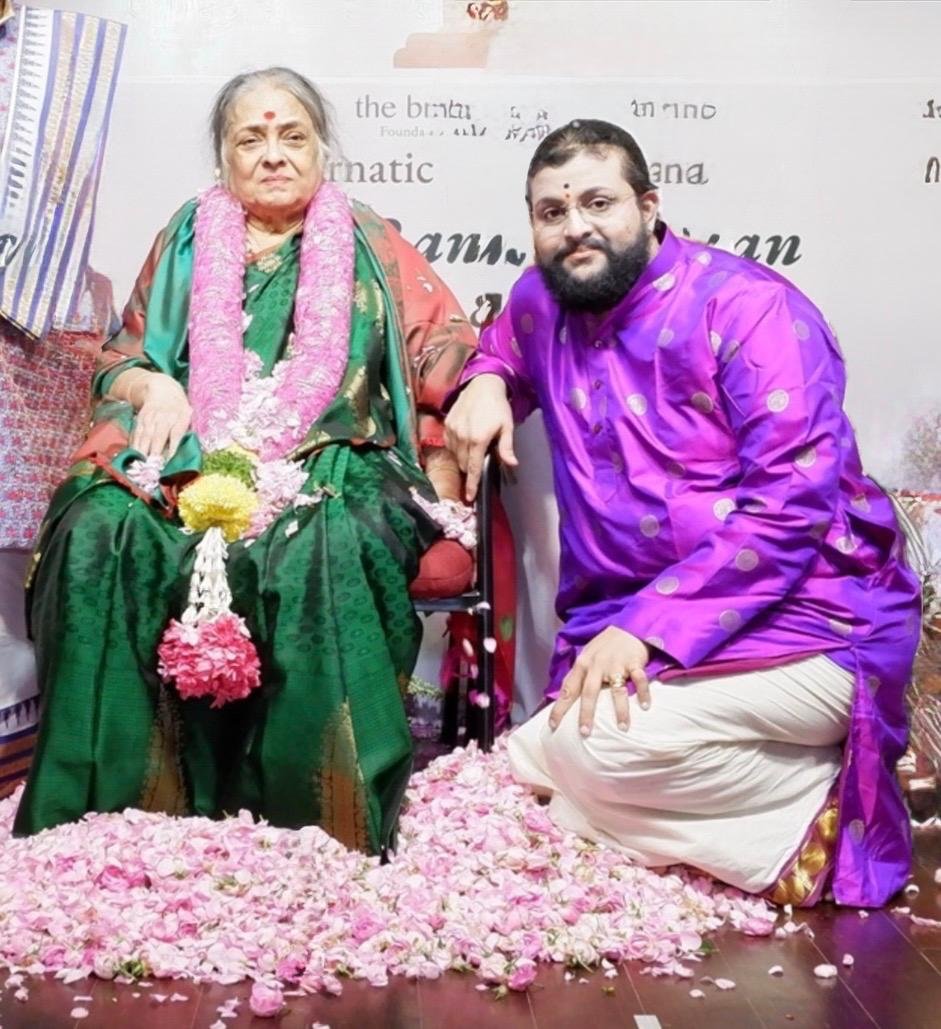
But Ram's pursuit did not stop there. What drew him irresistibly toward Smt. Vegavahini Vijayaraghavan was something larger and deeper than any single genre of composition — it was the totality of her musical world. A disciple of both Sangeetha Kalanidhi T. Brinda and the legendary Ramnad Krishnan, Vegavahini embodies a rare confluence of two of Carnatic music's most distinguished streams. Her repertoire, her aesthetic sensibility, her very manner of approaching a raga — all of it carries the unmistakable imprint of masters who shaped the tradition at its highest level. It was this completeness — this sense of a living, breathing musical universe — that Ram sought to learn from and absorb.
It is this privilege — of being received into Vegamma's musical world and learning directly under her guidance — that has become the most precious chapter in Ram's musical journey. Immersed in her tutelage, Ram has devoted himself to the full breadth and depth of the Brinda Bani — its raga exposition, its compositional treasury, its unique aesthetic of restraint and feeling — rendered in the slow, stately, alluring style that Brindamma perfected over a lifetime. It is music that does not rush to impress. It earns its place in your heart gradually, note by note, gamaka by gamaka.
To immerse oneself in the Brinda Bani is not merely to learn compositions. It is to draw from a tradition so deep and so rare that even the greatest luminaries of Carnatic music sought it at its source — among them Semmangudi Srinivasa Iyer, M.S. Subbulakshmi, Ramnad Krishnan, Aruna Sairam, and Chitravina Ravikiran, all of whom learnt at Brindamma's feet. That this tradition now flows — through Vegamma's grace — into Ram's music is something he holds not as an achievement but as a sacred responsibility.
That is what Sangeet Sadhana, at its heart, is all about.
To read about the other remarkable musicians who have shaped Ram's performing voice and rhythmic compass → Expanding the Repertoire, Perfecting the Rhythm
